Jason Huang

Whenever there is knee pain, hip stiffness, or the shoulders cannot be raised, the first thing many people think of is:
"Is it joint degeneration?"
Then, they hear another familiar phrase:
"When you reach a certain age, it naturally degenerates."
Consequently, many people start taking glucosamine, collagen, and hyaluronic acid, hoping to restore the "worn-down cartilage."
But have you ever thought about this question?
If joint degeneration is solely due to aging and cartilage wear, why do:
Some seventy-year-olds still go hiking and running?
Some people in their thirties or forties already start to experience degeneration?
Some people's X-rays show severe degeneration, yet they have almost no pain?
Some people have only mild degeneration, but find it difficult even to climb up and down stairs?
Perhaps the cartilage wear we see is only the final result, not the beginning of the entire story.
Joint Degeneration Is Not Just a Cartilage Problem
Nearly twenty years of research have revealed that joint degeneration is not simply "cartilage wear."
It simultaneously involves: cartilage, subchondral bone, synovium, joint capsule, ligaments, surrounding muscles, and chronic low-grade inflammation (Su’an et al, 2025), which means it involves most of the joint's soft tissue structures.
In other words, joint degeneration is actually a process where the entire joint system gradually loses its balance.
But this still leaves a question worth considering: Why exactly do these tissues begin to change?
We might be overlooking a more important matter — "space"
Imagine a door that is opened and closed every day.
If the door frame slowly begins to deform, the door itself is not broken, but it will start to rub every time it is opened or closed.
Over time, the door truly becomes damaged. Most people will fix the door, but few ever check if the door frame was already deformed long ago.
The human joints might be the same. We have been focusing our attention on cartilage. However, we rarely consider whether the soft tissues surrounding the joint have already undergone changes (Figure 1).
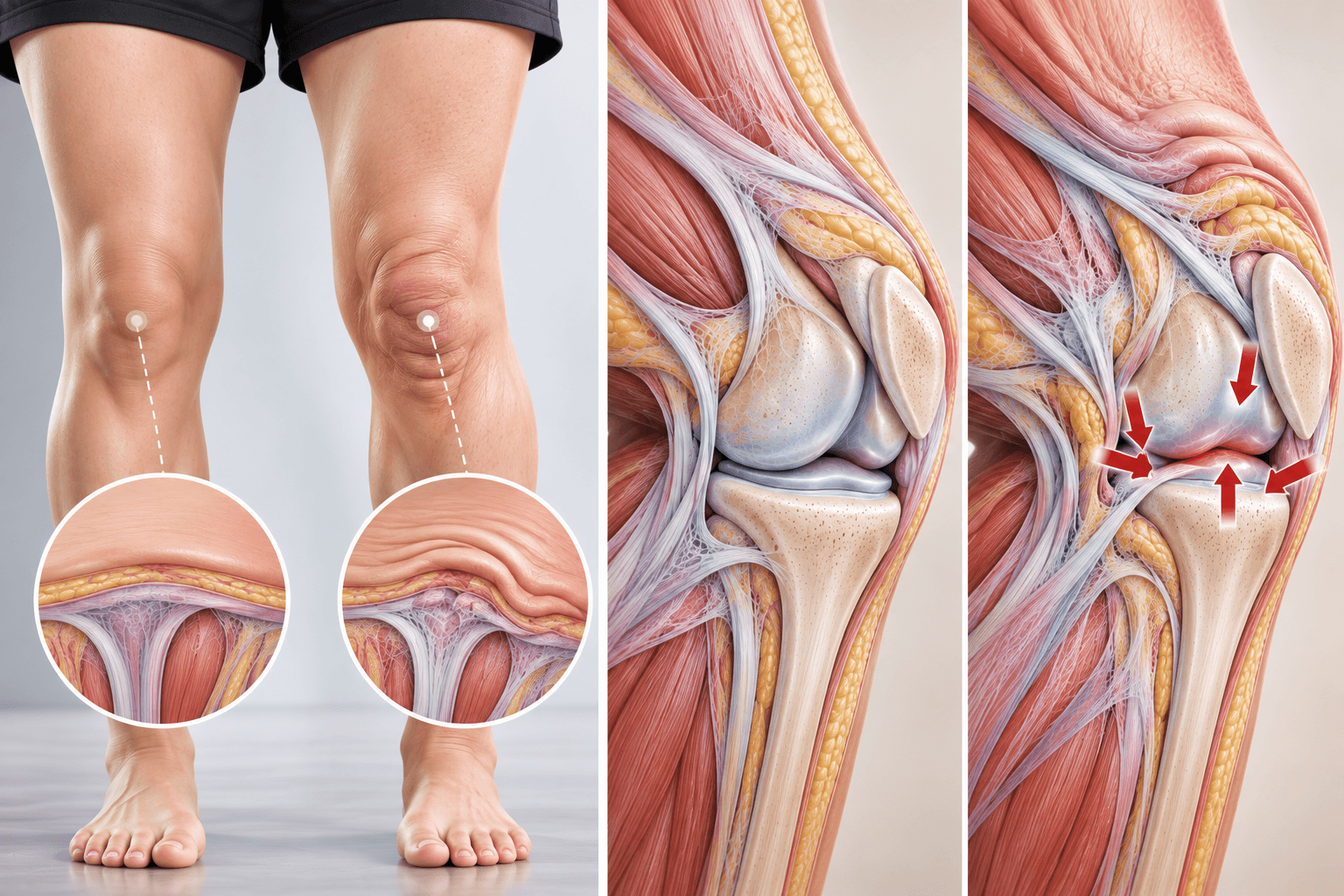
Figure 1: Deformation of the soft tissues in the knee joint may reduce the movement space of hard tissue (bone) and alter the biomechanical trajectory of joint movement.
What Truly Moves in the Human Body is More Than Just Bones and Joints
Many people believe that joint movement is just the bones moving. But in fact, the movement of bones and joints is produced passively. Every time you raise your hand, squat, walk, or run, the soft tissues that actually move together include: skin, superficial fascia, deep fascia, fat, muscle, joint capsule, ligaments, and tendons. These tissues must slide against and make room for one another to allow the joint to smoothly complete every movement.
What is truly important is not just the tissues themselves, but whether there is sufficient movement space preserved between them.
When Tissue Space Gradually Disappears, It Is the Start of a Chain of Changes
The human body adapts to our lifestyle every day.
If we sit for eight to ten hours a day, the hip joint remains in flexion for a long time; if we look down for long periods, the soft tissues around the neck and shoulders continuously bear pressure in a fixed direction.
These changes may not immediately cause pain, but over long-term accumulation, they may cause the soft tissues around the joints to gradually experience: altered alignment, decreased relative sliding capability, localized fibrosis, tension imbalance, and three-dimensional spatial redistribution. These changes may appear much earlier than cartilage wear.
So What Truly Degenerates Might Not Be the Tissue, But Rather "The Reduction of Space"
This is a question I have been contemplating in recent years. When we think of human aging, we usually think of: muscle loss, osteoporosis, and cartilage wear. But another possibility worth exploring is that what truly ages earliest in the human body might be the space between soft tissues.
When space gradually decreases, tissues begin to squeeze against each other, sliding becomes restricted, local pressure starts to concentrate, and consequently, the movement trajectory of the joint begins to change. At this point, the body can still move, but every movement involves a bit more friction and a bit more compensation than before. This is also why some people's joints make popping or clicking sounds (Figure 2).
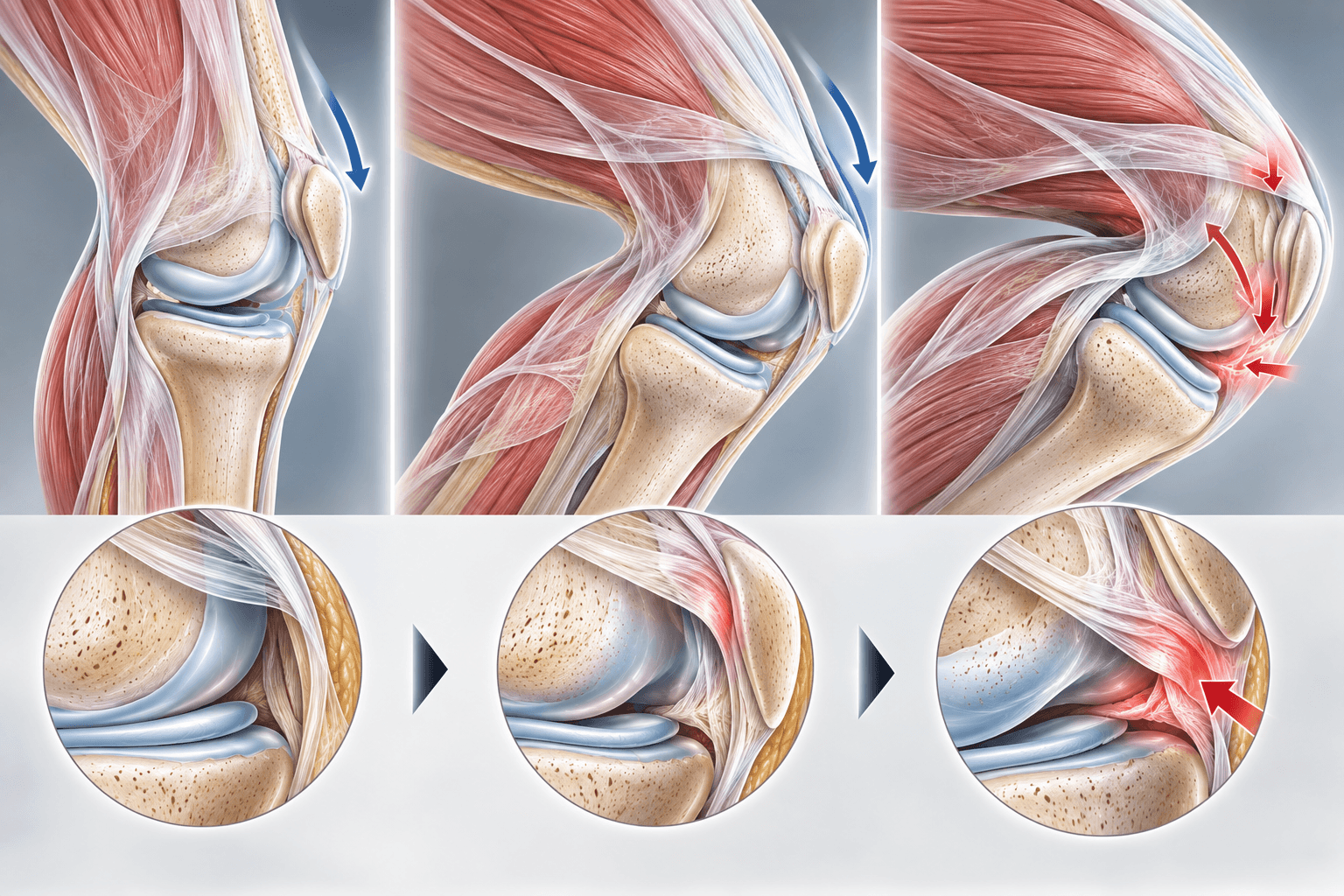
Figure 2: Clicking sounds during knee joint movement may be due to insufficient space caused by deformation of soft tissues around or within the joint. The image on the right shows soft tissue compression, which creates friction sounds during knee joint movement.
When there is insufficient space, the biomechanical environment of the joint (Figure 3) will begin to worsen. Over time, degenerative phenomena such as chronic inflammation, cartilage metabolism imbalance, and bone spur formation gradually appear.
In other words, cartilage may not be the first tissue to change, but rather the most easily visible outcome.
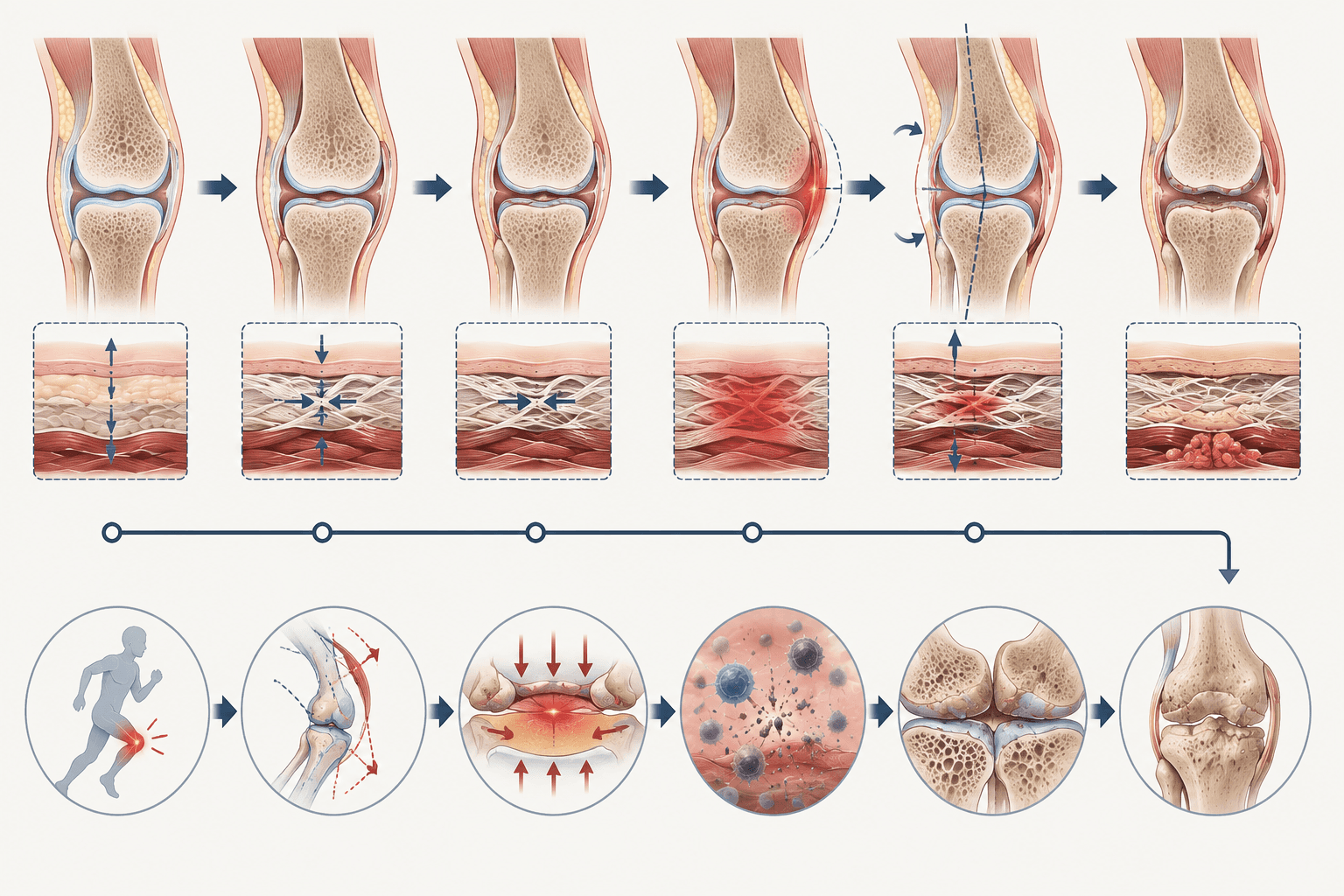
Figure 3: Wear and tear of joint cartilage is caused by changes in the deformation and alignment of soft tissues, progressing gradually from left to right.
Taking Hip Problems Caused by Prolonged Sitting as an Example
Following the above, when the hip joint remains in a flexed posture for long periods daily, the soft tissues around the anterior joint are compressed for a long time. Their sliding ability may gradually decrease, and the tissue alignment slowly changes. This can lead to the following problems:
Restricted hip extension
Decreased gluteal muscle activation
Increased pelvic compensation
Inward-slanted thighs (false hip width)
Flat buttocks
Altered gait
These changes in appearance and function are not necessarily bone deformations; rather, they may reflect that soft tissue space and alignment have already changed.
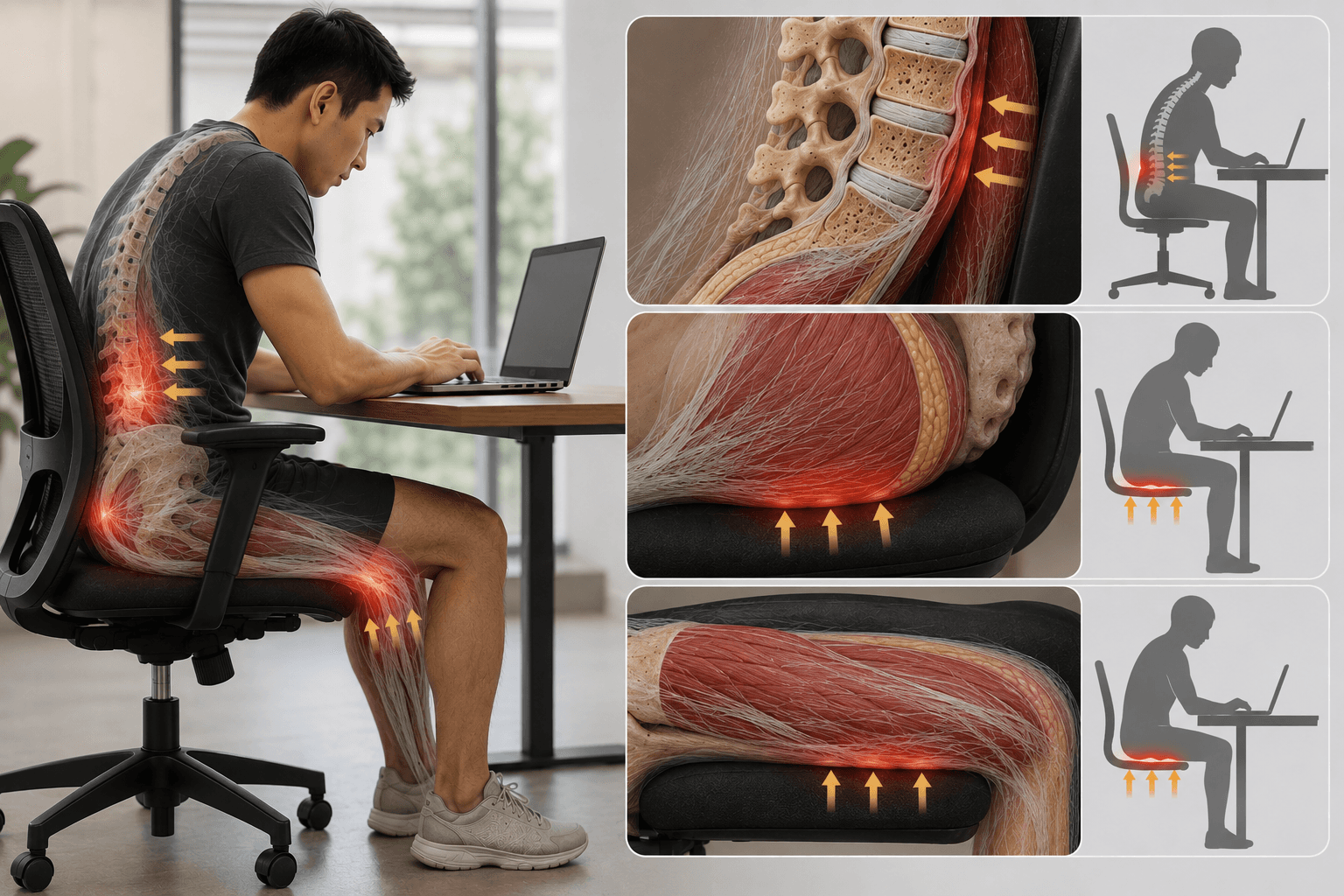
Figure 4: During prolonged sitting, abdominal soft tissues are squeezed outward in all directions and backward against the lumbar spine. The buttocks and back of the thighs are directly compressed and deformed.
Should We Rethink "Joint Care"?
If joint degeneration is not just a cartilage problem, then joint care should perhaps not only consist of nutritional supplementation, muscle strengthening, and weight control. We should also begin to focus on avoiding prolonged fixed postures, maintaining the range of motion of soft tissues around the joints, preserving the sliding ability between various layers of soft tissue, and maintaining the balance of the three-dimensional space around the joints. These may all be indispensable parts of maintaining joint health. In future articles, we will introduce how to comprehensively care for your joints.
Only when soft tissues are healthy can joints be healthy.
Disclaimer | The content of this article is for health education and body maintenance knowledge sharing only. It does not constitute any medical diagnosis, treatment, or medical advice, nor can it replace professional medical opinions. If you have health concerns, please consult a qualified healthcare professional.
Case shares or research results only represent observations under specific subjects or research conditions and do not imply that everyone will obtain the same results.


